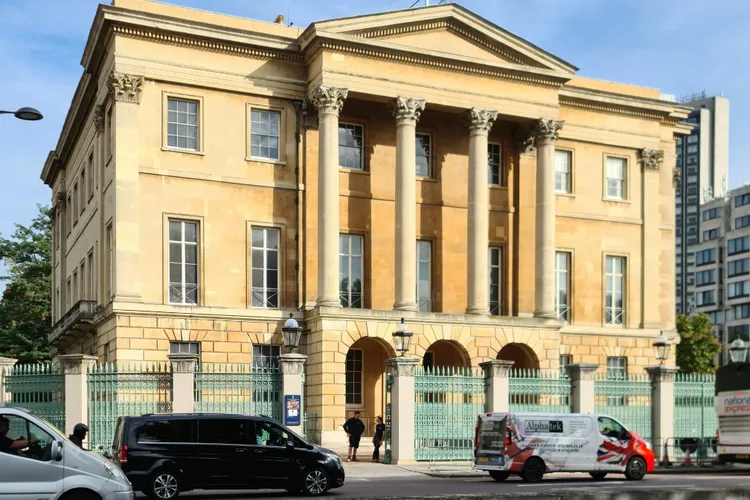
Photo: Ricardalovesmonuments / CC BY-SA 4.0 — cropped and resized
About
Apsley House, known as 'Number One, London' due to its prestigious address at the entrance to the capital, was the London residence of Arthur Wellesley, 1st Duke of Wellington, Britain's most celebrated military hero who defeated Napoleon at Waterloo. This magnificent Regency mansion, designed by Robert Adam and later remodeled, houses the Wellington Collection - an extraordinary assemblage of paintings, sculptures, porcelain, silver, and military memorabilia accumulated by the Duke through victories, diplomatic gifts, and personal acquisition.
The house itself embodies triumph and power, its grand rooms filled with treasures that tell the story of Wellington's military genius, political career, and social prominence.
The art collection is particularly remarkable, containing works by Velázquez, Rubens, Van Dyck, Goya, and others - many captured from the French during the Peninsular War. The opulent Waterloo Gallery, added by Wellington to host annual Waterloo Banquets for fellow veterans, showcases the grandeur with which Britain celebrated its hero.
Visitors walk through rooms filled with silverware presented by grateful nations, porcelain services commissioned for state occasions, and portraits of European royalty and statesmen.
A colossal nude statue of Napoleon by Canova stands prominently on the staircase - a gift Wellington initially found embarrassing but came to appreciate. The house preserves Wellington's study, dining room, and personal apartments, offering insight into how this austere military man lived surrounded by luxury and honors.
Apsley House represents not just one man's residence but a national monument to victory over Napoleon, a showcase of European diplomatic gifts, and an important art collection made accessible to the public by the current Duke of Wellington in partnership with English Heritage.
Categories:
Plan Your Visit
Highlights
The Waterloo Gallery
The magnificent Waterloo Gallery was added to Apsley House specifically to host the annual Waterloo Banquet, where Wellington entertained fellow Waterloo veterans every anniversary. This 90-foot long gilded gallery showcases the opulence surrounding Britain's military hero. The walls are hung with major paintings from the collection including works by Velázquez and Goya.
The table is set with the Portuguese Service - an enormous silver centerpiece and plateau presented by the grateful Portuguese government. Portraits of European monarchs and military commanders line the walls. The gallery represents Wellington at the height of his fame and power, celebrating victory through lavish hospitality.
Today it remains one of London's most spectacular historic interiors.
Velázquez's 'The Waterseller of Seville'
Among the collection's masterpieces is Velázquez's 'The Waterseller of Seville,' considered one of the artist's finest works. This painting, along with many others, was captured from Joseph Bonaparte's baggage after the Battle of Vitoria in 1813. Wellington offered to return the collection to Spain, but Ferdinand VII insisted Wellington keep them.
The paintings therefore carry both artistic and historical significance - spoils of war that became diplomatic gifts. The Velázquez exemplifies the Spanish master's skill in depicting common people with dignity and his mastery of light and texture.
Canova's Napoleon Statue
Dominating the staircase is Antonio Canova's colossal nude statue depicting Napoleon as Mars the Peacemaker. Standing over 11 feet tall and weighing several tons, this marble masterpiece was commissioned by Napoleon himself. After Napoleon's fall, the British government purchased it and presented it to Wellington - the man who defeated Napoleon.
Wellington initially found the nude statue embarrassing and covered it, but later embraced it as symbol of victory. The statue represents neoclassical sculpture at its finest and creates a dramatic focal point, forcing visitors to confront Napoleon's legacy while ascending to Wellington's triumph.
The Duke's Study and Personal Rooms
Wellington's private study and personal apartments reveal the man behind the military legend. The study contains his campaign desk, maps, and personal papers. Furnishings show austere taste befitting a soldier - Wellington famously slept on a simple camp bed rather than elaborate four-poster.
Personal items including his death mask, funeral relics, and everyday possessions humanize this towering historical figure. These rooms contrast sharply with the public grandeur of the state rooms, showing Wellington's own preferences versus his role as national hero and public figure.
Collections
The Wellington Collection comprises over 200 paintings including works by Velázquez, Rubens, Correggio, Van Dyck, Murillo, Goya, and others - many seized from Joseph Bonaparte's baggage train after the Battle of Vitoria. Sculptures include Canova's colossal nude Napoleon. Decorative arts include magnificent silver services, porcelain services from European royal manufactories, furniture, and Wellington's campaign equipment.
Military items include swords, medals, uniforms, and battle relics. The house itself is a masterpiece of Regency architecture.
The Wellington Collection
Complete collection of paintings, sculptures, decorative arts, and memorabilia
📍 Throughout house
The Waterloo Gallery
Grand gallery created for annual Waterloo Banquets
📍 First floor
Wellington's Personal Apartments
Private rooms showing the Duke's personal life and preferences
📍 Upper floors
Themes
Time Periods
Current Exhibitions
No current exhibitions. Please check the museum website for updates.