About
Black Cultural Archives is the United Kingdom's only national heritage centre dedicated to collecting, preserving and presenting the histories of people of African and Caribbean descent in Britain. It occupies a restored listed building on Windrush Square in Brixton, and its remit is national rather than local: the records it holds document Black British life across the country and across centuries, not simply the history of the district in which it stands.
It was founded in 1981, and the date matters. That year opened with the New Cross Fire, in which thirteen young Black people died and which many in the community believed was never properly investigated, and continued with the Brixton uprising in April. Against that background, the educationalist and historian Len Garrison and his colleagues established what became Black Cultural Archives, on the premise that a community whose past is undocumented is a community whose present can be dismissed. Garrison's question — where are our heroes, our martyrs, our monuments — remains the clearest statement of the institution's purpose.
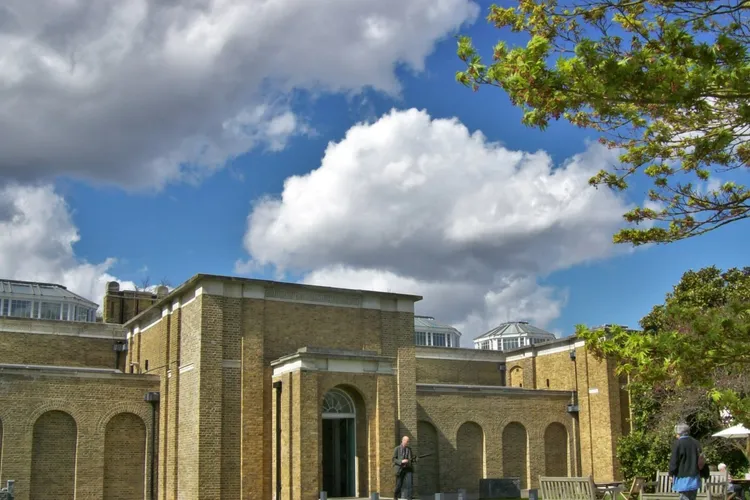
For its first three decades the organisation operated without a permanent public home, building collections while campaigning for one. The Windrush Square building opened in July 2014, pairing a conserved Georgian-era hall with a modern extension, and gave the archive proper storage, a reading room, exhibition galleries, learning spaces and a public presence in the heart of Brixton.
The collections are primarily documentary: personal papers of activists, writers and community figures; the records of campaigning and community organisations; photographs; ephemera such as posters, pamphlets and flyers; oral history recordings; and printed material including a reference library. Together they preserve evidence that mainstream archives largely failed to collect, from the arrival of the Windrush generation through the struggles over education, policing, housing and employment that followed.
Entry to the exhibitions, museum objects and reference library is free. The reading room, where original archive material is consulted, operates on more limited hours and requires planning, and it is worth checking those before visiting if research rather than exhibitions is your purpose.
The institution also runs an active learning and public programme of talks, courses and workshops, and works with schools on material that the standard curriculum has historically handled thinly or not at all. That educational function was part of the founding purpose rather than an addition to it, and it remains central to how the organisation understands its role.
Categories:
Plan Your Visit
⏱️ Recommended Visit Duration
💡 Visitor Tips
- Closed Sunday and Monday. Tuesday to Saturday 10:00-18:00, with late opening until 19:00 on the second Thursday of each month.
- Know which visit you are making. Exhibitions are open during the building's general hours; consulting original archive material happens in the reading room, which runs Wednesday to Friday 10:00-16:00 and is a different proposition.
- On Saturdays you can browse the reference library between 13:00 and 16:00, but archive material is not available that day.
- Contact staff ahead of a research visit about specific holdings — the collections are large and much of the material is not open-shelf.
- Admission to exhibitions, museum objects and the reference library is free; some talks, workshops and events are ticketed separately.
- Come by public transport. There is no parking, street parking in Brixton is heavily restricted, and the site is inside the Ultra Low Emission Zone.
- Note that Brixton Underground station is not step-free from street to platform; the buses stopping at Windrush Square are the better route for wheelchair users.
- There is no cafe on site, but Brixton Village and Market Row are five minutes away and are among the best places to eat in south London.
Highlights
A National Archive of Black British History
Black Cultural Archives is the only heritage institution in the United Kingdom whose entire remit is the history of people of African and Caribbean descent in Britain, and its collections are national in scope rather than confined to London or to Brixton. That singularity is the central fact about it.
For decades, material documenting Black British life was systematically not collected by mainstream archives, meaning that whole strands of twentieth-century British history existed only in private hands and were at constant risk of being lost when households moved or people died.
This institution exists to prevent that.
Founded in 1981
The organisation was established in 1981, a year that began with the New Cross Fire, in which thirteen young Black people died at a house party in south-east London and which many believed was never adequately investigated, and continued through the Brixton uprising that April. Len Garrison and his colleagues founded what became Black Cultural Archives in that context, arguing that a community without documented history could be denied a legitimate claim on the present.
The founding is not background detail; it is the argument the institution was built to make.
Len Garrison's Question
Len Garrison, an educationalist, historian and one of the founders, is remembered for the question that framed the project: where are our heroes, our martyrs and our monuments? He was working with Black schoolchildren in a system that offered them almost nothing of their own history and frequently misdescribed what it did offer.
The archive was conceived as an answer — a place where the evidence would be gathered, kept properly and made available — and that educational purpose remains central to its learning programme today.
He had also been a founder of the Afro-Caribbean Education Resource project, and his concern was practical rather than abstract: children who never encounter their own history in a classroom draw conclusions about their own worth from that absence.
Personal Papers and Organisational Records
The heart of the collection is documentary: the personal papers of activists, writers, educators, campaigners and community figures, together with the working records of the organisations they built — supplementary schools, parents' movements, campaign groups, cultural bodies and community associations.
This is the material through which the actual mechanics of Black British political and community life can be reconstructed: minutes, correspondence, membership records, financial papers. It is unglamorous, irreplaceable and precisely the category of record that goes in a skip when nobody is collecting it.
Supplementary schools alone, run at weekends by parents who judged the state system to be failing their children, generated decades of paperwork that exists nowhere else in any organised form.
Collections
Black Cultural Archives holds the United Kingdom's only national collection dedicated to the histories of people of African and Caribbean descent in Britain. Holdings are principally documentary and include the personal papers of activists, writers, educators and community figures; the records of campaigning organisations, supplementary schools, parents' movements, cultural bodies and community associations; photographic collections; printed ephemera such as posters, pamphlets, flyers and programmes; oral history recordings; and a reference library.
Together the collections document arrival and settlement from the Windrush period onward, and the sustained organisation around education, policing, housing, employment and cultural life that followed, preserving categories of record that mainstream archives largely failed to collect.
Museum objects and changing exhibitions draw on this material and on partnerships with artists and researchers.
Changing Exhibition Programme
Rotating gallery displays drawing on the archive's holdings and on collaborations with artists, researchers and community groups, covering Black British history and its contemporary resonance.
The Reading Room and Reference Library
Public access to original archive material by arrangement, alongside a reference library of published work on Black British and diaspora history.
Themes
Time Periods
Current Exhibitions
No current exhibitions. Please check the museum website for updates.