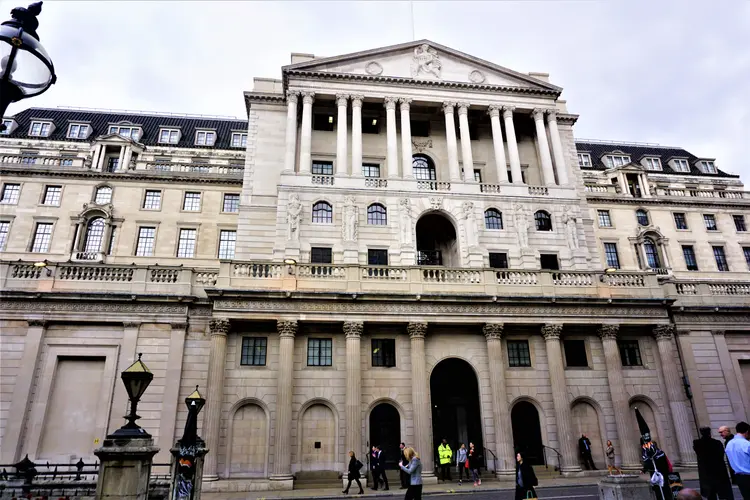
Photo: Joyofmuseums / CC BY-SA 4.0 — cropped and resized
About
The Bank of England Museum tells the fascinating story of Britain's central bank from its founding in 1694 through over three centuries of economic history, financial crises, policy innovations, and the evolution of modern banking that shaped not just British but global financial systems. Located within the Bank of England's massive Portland stone headquarters in the City of London, the museum occupies a carefully reconstructed Georgian banking hall designed by Sir John Soane in the late 18th century, destroyed in the 1920s-30s rebuilding but painstakingly recreated for the museum's 1988 opening using Soane's original drawings and surviving architectural fragments.
The museum traces the Bank's evolution from a private institution financing William III's wars against France through its gradual assumption of central banking functions - managing government debt, controlling currency issue, setting interest rates, supervising commercial banks, and maintaining financial stability during economic crises from the South Sea Bubble through Victorian panics, the Great Depression, the 2008 financial crisis, and recent economic challenges.
Displays explore how banking technology evolved from handwritten ledgers through mechanical accounting machines to modern electronic systems processing billions of transactions daily. The currency collection showcases the evolution of British money from gold and silver coins through early banknotes (once handwritten and individually signed by Bank cashiers) to modern polymer notes with sophisticated anti-counterfeiting features.
Visitors can handle a genuine gold bar worth hundreds of thousands of pounds, experiencing the surprising weight of gold's density.
Interactive displays explain monetary policy, inflation targeting, interest rate decisions, and the Bank's role in maintaining price stability and supporting economic growth - translating complex economic concepts into understandable terms. Historical artifacts include pikes and muskets used to defend the Bank from the Gordon Riots in 1780, documents bearing signatures of historic Governors, early banking technology, architectural models and drawings, wartime archives showing the Bank's evacuation during the Blitz, and objects illustrating the institution's social history from the Bank's sports clubs and staff welfare programs.
The reconstructed banking hall's Soane architecture represents neo-classical design at its most refined, with subtle curves, shallow domes, and elegant proportions creating spaces that are both functional banking environments and beautiful architectural statements.
Beyond celebrating institutional history, the museum contextualizes the Bank within broader economic and social developments - the Industrial Revolution's financing needs, Victorian financial crises, the gold standard's adoption and abandonment, wartime economics, post-war reconstruction, inflation battles of the 1970s-80s, the Bank's independence from government in 1997, and modern challenges of globalized finance.
For anyone interested in economic history, monetary policy, banking evolution, or understanding the institution that manages the pound and influences mortgages, savings, and economic conditions affecting daily life, the museum offers accessible entry into topics often mystified by technical jargon. The free admission encourages visitors who might not seek out a banking museum, while the central City location near other attractions makes it easy to include in broader London tourism.
Categories:
Plan Your Visit
⏱️ Recommended Visit Duration
📅 Best Times to Visit
Quietest: Monday, Friday
Busiest: Wednesday, Thursday
💡 Weekday mornings or after 2pm when school groups have typically departed
💡 Visitor Tips
- Free admission makes this an excellent addition to City of London sightseeing - no ticket booking needed, just walk in during weekday opening hours.
- Security screening on entry is standard procedure - allow a few minutes for airport-style security checks before entering the museum.
- Don't miss touching the real gold bar - it's the museum's signature interactive experience and surprisingly heavy, worth hundreds of thousands of pounds.
- Visit on a weekday morning or Friday afternoon for quieter browsing - midweek attracts more school groups and financial professionals on lunch breaks.
- The museum is only open Monday-Friday (appropriately closed on bank holidays and weekends) - plan accordingly as it won't be open during weekend London visits.
- Allow 60-90 minutes for a thorough visit - the museum is compact but content-rich, with displays warranting careful reading to understand economic concepts.
- Free guided tours provide valuable context and expert explanations of banking history and monetary policy - check the schedule when you arrive.
- The museum shop sells interesting Bank of England publications, commemorative coins, and financial history books unavailable elsewhere.
- Photography is permitted - the Soane architecture, gold bar, historic banknotes, and interactive displays all make interesting subjects.
- Combine your visit with other City of London attractions nearby - St Paul's Cathedral, Museum of London, Guildhall, and Tower of London are all within walking distance.
Highlights
Real Gold Bar You Can Touch
The museum's most popular interactive feature allows visitors to reach through a cylindrical security enclosure and touch a genuine gold bar from the Bank's reserves, experiencing firsthand the surprising weight and density of gold that makes it both valuable and impractical for daily transactions.
The standard gold bar (400 troy ounces, approximately 12. 4 kilograms or 27 pounds) contains gold worth hundreds of thousands of pounds at current prices, yet its compact size demonstrates why gold has served as valuable portable wealth throughout history.
The weight surprises most visitors - gold's extreme density (19. 3 times denser than water) means a small volume weighs far more than expected. This hands-on experience conveys gold's material properties more effectively than any explanation could, while also illustrating why paper money and digital transactions replaced metal currency for most purposes.
The gold bar display connects to broader themes of currency evolution, the gold standard era when Bank notes were promises to pay in gold, the abandonment of gold backing in the 20th century, and the Bank's continuing gold reserves held partly in historic vaults deep beneath the building. For many visitors, touching real gold represents the museum's most memorable moment - an unexpected tactile encounter with precious metal usually kept far from public contact.
Soane's Reconstructed Banking Hall
The museum occupies a meticulous reconstruction of Sir John Soane's late 18th-century Bank Stock Office, recreating one of the architect's finest interiors that was tragically demolished during the Bank's 1920s-30s rebuilding and expansion.
Using Soane's original architectural drawings, watercolor perspectives, and surviving architectural fragments, the reconstruction revives the neo-classical elegance and spatial sophistication that made Soane one of Britain's greatest architects. The rotunda features Soane's characteristic shallow dome supported on columns, creating an intimate yet monumental space.
Arched openings, subtle curves, and carefully calibrated proportions demonstrate Soane's mastery of classical architecture adapted to functional banking spaces that needed to process transactions efficiently while projecting institutional stability and permanence. The reconstruction preserves Soane's Bank architecture that otherwise survives only in the windowless perimeter wall - Herbert Baker's 1920s-30s rebuilding demolished Soane's intricate interior courtyards and banking halls, an architectural loss considered tragic by preservation advocates.
The museum space thus serves dual purposes as exhibition venue and architectural monument, allowing visitors to experience Soane's design genius that shaped the Bank for over a century.
Architectural details throughout - ceiling decoration, floor patterns, column capitals, lighting solutions - reveal Soane's refinement and the neo-classical aesthetic that dominated British institutional architecture in the late Georgian era.
Evolution of British Currency
Extensive displays trace British currency development from medieval coins through banknote evolution to modern polymer notes with advanced security features, showing how money forms reflected technological capabilities, economic conditions, and anti-counterfeiting battles across centuries. Early Bank of England notes from the 1690s-1700s were partially handwritten documents individually signed by Bank cashiers, essentially promissory notes that the Bank would pay the bearer in gold upon demand.
The transition to fully printed notes, mechanized numbering, standardized designs, and eventually color printing charts printing technology progress alongside anti-counterfeiting innovations.
The collection includes damaged notes withdrawn from circulation, showing wear patterns and the durability challenges that led to modern polymer notes replacing paper. Security feature evolution demonstrates the arms race between forgers and note producers - watermarks, security threads, holograms, microprinting, color-shifting ink, and polymer windows with transparent elements represent increasingly sophisticated protection.
The displays explain how currency design balances security against usability, durability against production costs, and tradition against modernization.
Beyond technical aspects, the notes reflect British history and identity - monarchs' portraits, national symbols, honored individuals (scientists, writers, social reformers) featured on denominations, and design changes marking different eras. Understanding currency evolution illuminates broader themes of trust in money, state authority, technological progress, and the abstraction from precious metal to paper to digital transactions.
Banking During the World Wars
Compelling displays document the Bank of England's wartime role during both World Wars when maintaining financial stability became essential to the war effort, requiring dramatic operational changes and presenting existential threats. During World War I, the Bank managed the transition from gold standard to paper currency, financed massive government borrowing, dealt with inflation from war spending, and helped coordinate Allied financial cooperation.
World War II presented even greater challenges - the Blitz bombing campaign targeted the City of London including the Bank, forcing evacuation of reserves, documents, and essential functions to safer locations outside London while maintaining skeleton operations in the damaged building.
Photographs show bomb damage, emergency operations, and staff working in difficult conditions. The displays explore currency restrictions, rationing systems, the financing of wartime production, management of the national debt that exploded during six years of total war, and post-war reconstruction challenges.
Artifacts include civil defense equipment, wartime Bank notes with special features, documents relating to evacuations and security measures, and photographs documenting the Bank's war experience.
The narrative emphasizes how central banking functions - maintaining currency value, managing government debt, ensuring financial system operation - became war-critical activities supporting national survival. For visitors interested in World War II home front history, the displays provide perspectives on economic warfare and financial management alongside the military narratives that dominate war museums.
Collections
The Bank of England Museum's collections encompass objects, documents, and artifacts documenting over three centuries of British banking, monetary policy, and economic history. Holdings include historic Bank of England banknotes from the 1690s through modern polymer notes, coins and currency samples, gold bars and precious metals, banking equipment and technology from quill pens and ledgers through mechanical accounting machines to modern computers, architectural drawings and models of the Bank's buildings especially Soane's demolished interiors, portraits and photographs of Governors and staff, historical documents including charters, account books, policy papers and correspondence, artifacts relating to social history including the 1780 defense weapons, wartime materials documenting evacuations and bomb damage, ceremonial objects and Bank plate, and interactive displays explaining modern monetary policy.
The museum balances historical objects with contemporary educational functions, using authentic artifacts to illuminate banking evolution while explaining current Bank operations and economic concepts.
The collections serve both institutional heritage preservation and public education, making technical financial history accessible and engaging for diverse audiences from school children through economics professionals.
The Bank's Story 1694-Present
Chronological displays tracing the Bank's evolution from private war-finance institution to modern central bank with monetary policy responsibilities.
📍 Throughout museum
The Evolution of Money
Currency collection showing British money development from coins through handwritten notes to modern polymer currency with security features.
📍 Currency gallery
Modern Monetary Policy
Interactive displays explaining how the Bank manages interest rates, controls inflation, and maintains financial stability in contemporary economy.
📍 Modern banking section
Themes
Time Periods
Current Exhibitions
No current exhibitions. Please check the museum website for updates.