The Four Houses That Reveal London Better Than Any Cathedral
Four Houses, Four Ways of Living
Before the practicalities, the framing. Each of these houses was, in its day, an answer to a different question.
Sir John Soane's Museum is the architect's obsession — a working professional's home transformed, over thirty years, into a teaching collection. Soane was the architect of the Bank of England (the original, since demolished by his successors, which he never quite forgave them for) and lived in a house he gradually engineered into a three-dimensional manifesto. He left it to the nation in 1837 on the condition that nothing be moved.
Dr Johnson's House at 17 Gough Square is the writer's workshop. Samuel Johnson lived there from 1748 to 1759, paying £30 a year in rent, and it was in the garret at the top of the building that he and his five or six assistants compiled A Dictionary of the English Language — the first serious dictionary of English, the one that fixed the language. The house is, as the trust now puts it, a time capsule from the Age of Enlightenment.
The Wallace Collection at Hertford House is the aristocratic inheritance — five generations of Marquesses of Hertford and one illegitimate son, Sir Richard Wallace, accumulating French eighteenth-century furniture, Old Master paintings, Sèvres porcelain, arms and armour, and roughly anything else that money and taste could acquire across two centuries of European wealth. Lady Wallace bequeathed the lot to the nation in 1897 on the condition that nothing ever leave the building. Nothing ever has.
The Museum of the Home in Hoxton is the curator-of-the-ordinary — the only one of the four that isn't really a house at all, but a Grade I-listed eighteenth-century almshouse complex turned into a museum about how ordinary people have lived for the last four hundred years. Its Rooms Through Time recreate middle-class London interiors from 1600 to the present, including a 1790s parlour, a Victorian séance, and a 1998 Shoreditch flat shared by a gay couple.
Architect, writer, aristocrat, ordinary Londoner. Holborn, Fleet Street, Marylebone, Hoxton. Each one a different London.
Sir John Soane's Museum: The Architect Who Wouldn't Stop Collecting
Soane bought 12 Lincoln's Inn Fields in 1792, then 13 in 1807, then 14 in 1823, and combined them. Inside, he created what is essentially a single, continuous installation — domes that reveal themselves through floor openings, mirrors that double the space, a Picture Room whose walls fold open to reveal more paintings hidden behind, and, in the basement, a ten-foot alabaster sarcophagus belonging to the Pharaoh Seti I.
Soane bought the sarcophagus for £2,000 in 1824 after the British Museum refused it. He held a three-day candlelit party to celebrate its arrival.
What makes the museum extraordinary isn't the collection alone — though it includes Hogarth's A Rake's Progress and An Election, paintings by Turner and Canaletto, over 20,000 architectural drawings, and antiquities from across the ancient world. It's that the building is the collection. The rooms don't house the objects; the objects and the rooms are the same project.
You're walking through an architect's brain, frozen in 1837.
What to know before you go
- Open: Wednesday to Sunday, 10am–5pm (last entry 4.30pm). Closed Monday and Tuesday; open on bank holidays.
- Admission: Free. No booking required — walk in. On busy days expect a wait of up to 30 minutes outside.
- Best time to visit: Arrive at opening, or on a Wednesday or Thursday morning.
- Highlights Tour: £25, daily at midday plus extra weekend slots — guarantees entry at a specific time.
- Free tours: Private Apartments (Wed/Fri/Sun, 2pm) and Drawing Office (Thu/Sat, 2.30pm) — first-come, first-served; sign up at the front desk on arrival. The Drawing Office only opened to the public in May 2023.
- Picture Room: Hinged walls open at 11am, 2pm, 3pm, and 4pm — plan your visit around these times or you'll miss half the paintings.
- No café, no shop. Strict no-flash, no-selfie-stick photography policy.
The neighbourhood
Lincoln's Inn Fields is the largest public square in London and one of the quietest — a barrister's lunchtime square ringed by the Inns of Court. The Hunterian Museum, on the south side, reopened in 2023 after a major refurbishment and is one of the strangest collections in the city: surgical instruments, anatomical specimens, the skeleton of the Irish Giant Charles Byrne. Free.
Walk five minutes south and you're in Covent Garden; ten minutes west and you're at the British Museum; twenty minutes east and you're at St Paul's. The museum has no café — for lunch, the Holborn area is excellent.
Dr Johnson's House: A Working Garret in the Age of Reason
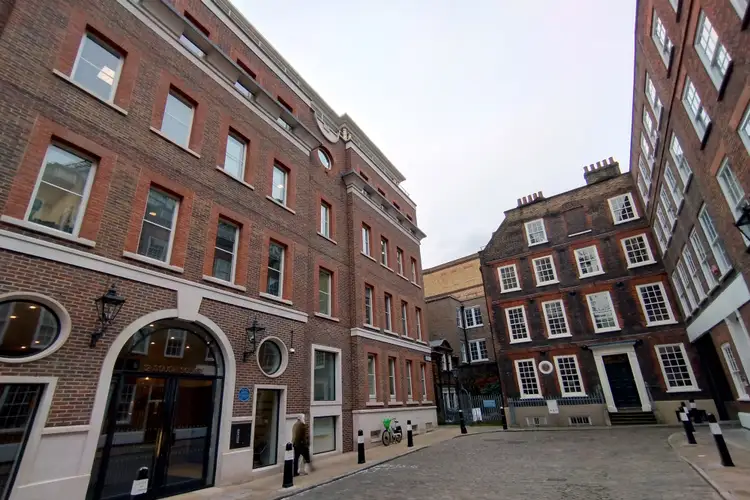
Tucked into a small L-shaped court north of Fleet Street, 17 Gough Square is the only one of Samuel Johnson's eighteen London residences to survive in the City of London. It's a four-bay, five-storey townhouse built around 1700 by a wool merchant named Richard Gough. Johnson signed a publishing contract for the Dictionary in 1746, used the advance of 1,500 guineas to take the house, and kitted out the top-floor garret 'like a counting house' for his assistants. The first edition appeared in 1755.
The house is small, narrow, intimate. A spiral staircase climbs through four floors. On a quiet weekday morning you might be the only visitor, ringing the bell to be let in. The rooms hold portrait prints of Johnson and his circle — Boswell, Reynolds, Garrick, the bluestockings, Johnson's manumitted servant and eventual heir Francis Barber — along with first editions, period furniture, and Johnsoniana of various kinds.
The garret is the point. This is where the Dictionary was actually compiled, and standing in it is the closest you'll ever come to looking over the shoulder of an eighteenth-century lexicographer. The room burned out during the Blitz; the rest of the house, miraculously, did not.
Outside in the square stands a small bronze statue of Johnson's cat Hodge, on a copy of Johnson's own dictionary, with an oyster at his feet — Johnson used to go out himself to buy oysters for the cat, rather than send a servant, lest the servant resent the animal.
What to know
- Open: Tuesday to Saturday, 11am–5pm (last entry 4.30pm). Closed Sunday, Monday, and over Christmas/New Year.
- Admission: Around £9 adult — verify current rates on the official website before visiting. Concessions and family tickets available.
- No wheelchair access: Seven steps to the front door, spiral staircase inside (listed building).
- Payment: Card only, no AmEx.
- Allow: 45 minutes to an hour.
The neighbourhood — and why this matters for St Paul's visitors
Gough Square is ten minutes' walk from St Paul's Cathedral — the single most useful piece of geography in this article. Anyone visiting St Paul's can, with very little extra effort, also visit Dr Johnson's House. Most don't, because they don't know it exists.
The walk itself is the route Johnson would have taken: down Fleet Street, past the Royal Courts of Justice and St Dunstan-in-the-West, past the entrance to Inner Temple, past Twinings at 216 Strand (which has been selling tea on the same premises for over 300 years). Round the corner from Gough Square is Ye Olde Cheshire Cheese, the Fleet Street pub Johnson and Boswell drank in. It's still a pub.
You can also string Soane's Museum and Dr Johnson's together as a single afternoon: it's a fifteen-minute walk between them through Chancery Lane, past the Silver Vaults and Hatton Garden. The new Museum of London is due to open at Smithfield just up the road, which will eventually make this corner of the city one of the densest cultural walks in London.
The Wallace Collection: The House Where Nothing Ever Leaves
Hertford House, on the north side of Manchester Square, is the kind of London building you walk past without registering. Late-Georgian, set back behind railings, with a courtyard. From the outside it doesn't announce itself. Inside is one of the most extraordinary private collections ever assembled — 5,500 works of art, twenty-five galleries, all of it bequeathed to the nation in 1897 with the strict condition that no object ever leave the building, even on loan.
That condition is the reason the Wallace Collection feels different from any other London museum. You cannot see Frans Hals's The Laughing Cavalier anywhere else. You cannot see Fragonard's The Swing, or Rembrandt's portrait of his son Titus, or Velázquez's Lady with a Fan, or Rubens's Rainbow Landscape, anywhere else. They have never travelled and they will never travel. If you want to see them, you come here.
The collection is staggering: French eighteenth-century furniture (probably the finest assembly outside the Louvre), Sèvres porcelain, gold snuffboxes, sixteenth- and seventeenth-century arms and armour, Limoges enamels, maiolica, paintings by Titian, Van Dyck, Gainsborough, Delacroix, Boucher, Watteau. The rooms remain dressed in silk and gilt; paintings, furniture, and porcelain are displayed together in the manner of a nineteenth-century private house, not sorted by category in white-cube galleries.
The Hertford-Wallace story is its own novel. Four Marquesses of Hertford, each adding to the collection. The fourth lived almost his entire life in Paris, never visited his country seat at Ragley Hall, and died in 1870 unmarried but with an illegitimate son — Richard Wallace — who inherited his unentailed fortune, was knighted for distributing food and ambulances during the Siege of Paris in 1870, and married his French mistress Julie Castelnau, who in turn left the lot to the British nation.
What to know
- Open: Daily, 10am–5pm. Closed only 24–26 December.
- Admission: Free to permanent galleries. Some special exhibitions carry a charge — check the website.
- No advance booking required for general admission — one of the few major London cultural sites you can still walk into on a whim.
- Best time to visit: Weekday mornings. The Great Gallery gets significantly busier after 2pm at weekends.
- Allow: Two to three hours.
- Courtyard restaurant (glass-roofed, run by Peyton and Byrne): book ahead for afternoon tea.
The neighbourhood
Marylebone, and specifically the stretch around Manchester Square and Marylebone High Street, is one of London's most pleasant central neighbourhoods to walk in. It's ten minutes from Bond Street tube (Central, Jubilee, Elizabeth lines) and twelve from Baker Street. The Royal Academy of Music is six minutes south on Marylebone Road; Wigmore Hall, one of the world's great chamber music venues, sits on Wigmore Street between the two.
Head ten minutes north into Marylebone Village: independent bookshops (Daunt Books on Marylebone High Street is a destination in itself), good restaurants, and Regent's Park fifteen minutes further north. Selfridges and Oxford Street are five minutes south — but you'd be wiser to stay in the village.
The Museum of the Home: Four Hundred Years of How We Actually Lived
Most museums are about extraordinary objects. The Museum of the Home is about ordinary ones. It sits in a row of Grade I-listed almshouses built in 1714 with money left by Sir Robert Geffrye, a former Lord Mayor and merchant whose wealth the museum is now careful to note was partly derived from the transatlantic slave trade. The almshouses were converted into a furniture museum in 1914, became the Geffrye Museum, and reopened in summer 2021 as the Museum of the Home after a £18 million refurbishment that increased exhibition space by 80%.
The permanent installation is Rooms Through Time — a sequence of recreated middle-class London living rooms from 1600 to the present. A panelled hall from 1630. A formal parlour from 1745. A drawing room from 1830 with the wallpaper, the gas lamps, and the antimacassars exactly right. A 1915 Arts and Crafts drawing room. A 1965 living room with a teak unit and a black-and-white television. A 1998 Shoreditch loft conversion. A 2049 imagined room asking what home will look like as climate and technology shift.
The companion Gardens Through Time outside trace the same chronology in plant form. There are also Home Galleries exploring what home means emotionally — a quieter, more reflective set of spaces — and rotating exhibitions drawing on the museum's collection of furniture, textiles, and domestic objects.
It is, deliberately, the opposite of the Wallace Collection. Where the Wallace shows you the finest chair ever made by a French cabinetmaker, the Museum of the Home shows you the kind of chair an actual middle-class Londoner sat in. Both are valid ways of understanding the past. Most people only ever see the first.
What to know
- Open: Tuesday to Sunday, 10am–5pm (last entry 4pm). Closed Monday.
- Admission: Free.
- Accessibility: Step-free access throughout — easily the most accessible of the four.
- Allow: At least an hour, ideally two.
- 2026 note: Construction work is scheduled in the Rooms Through Time: 1878–2049 gallery during 2026 — expect occasional noise and short closures. Check the website on the day.
- Café: Molly's Café, opposite the entrance — Monmouth coffee, home-baked cakes, proper breakfast and lunch.
The neighbourhood
This is the only one of the four that isn't in central London, and it's the better for it. Hoxton Overground station is directly opposite the museum — one minute's walk. From Liverpool Street it's two stops on the Overground; from central London, a ten-minute journey.
You're in Hoxton/Shoreditch territory: Columbia Road Flower Market on Sundays (eight minutes' walk), Brick Lane (fifteen minutes), Spitalfields (twenty minutes), Broadway Market (twenty-five minutes through London Fields). The street art on Redchurch Street and the surrounding lanes is some of the best in Europe.
The obvious cultural pairing is Dennis Severs' House at 18 Folgate Street — a candlelit Huguenot silk-weaver's home preserved as if the family had just left the room. A completely different but related concept. The Young V&A in Bethnal Green is fifteen minutes away.
How to See Them All: A Practical Geography
These four houses don't form a neat circuit. London geography never does. But they pair sensibly.
Day one — the City and Holborn
Start at Soane's at 10am opening. Spend two hours, including a Drawing Office or Private Apartments tour if the day allows. Walk fifteen minutes east through Chancery Lane and Fleet Street to Dr Johnson's House for a 1pm visit, with lunch first or after at Ye Olde Cheshire Cheese. Walk ten more minutes east and you're at St Paul's by mid-afternoon. Three significant sites, one walk, no Tube journeys.
Day two — Marylebone and Hoxton
The Wallace Collection in the morning (arrive at 10am, you'll have it largely to yourself for an hour before tour groups appear). Lunch in the courtyard, or walk five minutes to Marylebone High Street. From Bond Street take the Central line east to Liverpool Street, change to the Overground, two stops to Hoxton. Museum of the Home in the afternoon. Dinner in Shoreditch.
If you have only one day and one house
- Pick Soane's if you respond to weird, dense, idiosyncratic environments and don't mind queuing.
- Pick the Wallace if you want quiet, beauty, and a properly grand interior with food on site.
- Pick the Museum of the Home if you're more interested in social history than great art, or if you're travelling with children.
- Pick Dr Johnson's if you love books, language, or the eighteenth century — it pairs naturally with St Paul's or a Fleet Street walk anyway.
Three of the four are free. None require advance booking for general entry. All four close at 5pm and most close one or two days a week — always check before you travel.
Why These Houses Matter
There's a reason house museums occupy a particular place in the affection of people who love London. The big institutions — the British Museum, the V&A, the National Gallery — show you the world's possessions arranged for instruction. The houses show you something narrower and more intimate: the rooms in which specific people made specific things, or in which the textures of ordinary life accumulated and were preserved.
You can read Johnson's Dictionary. You can see the Hals in reproduction. You can find photographs of Soane's Picture Room online. None of it is the same as standing in the actual room, on the actual floorboards, beneath the actual ceiling, where the work happened. The houses give you that — the spatial reality of the past — in a way museums in the conventional sense rarely manage.
London has dozens of these places: Keats's house in Hampstead, the Charles Dickens Museum in Bloomsbury, Freud's house in Belsize Park, Handel and Hendrix in Mayfair (yes, the same building), Carlyle's House in Chelsea, Leighton House in Kensington, 18 Stafford Terrace, Strawberry Hill, Pitzhanger Manor (Soane again, his country house in Ealing). Most visitors never see any of them. Some Londoners go their whole lives without entering one.
Start with these four. They cover four centuries, four neighbourhoods, four social registers, and four entirely different ideas of what a house is for. Together they will change the way you see the city — not as a sequence of monuments, but as a place that people, very specific people, lived in.
At a Glance
Sir John Soane's Museum
- Address: 13 Lincoln's Inn Fields, WC2A 3BP
- Nearest station: Holborn
- Open: Wed–Sun, 10am–5pm
- Admission: Free
- Booking: Walk in (or book Highlights Tour, £25, for guaranteed entry)
- Allow: 1.5–2.5 hours
- Café / shop: None
- Accessibility: Limited; lift available
Dr Johnson's House
- Address: 17 Gough Square, EC4A 3DE
- Nearest station: Chancery Lane or Blackfriars
- Open: Tue–Sat, 11am–5pm
- Admission: ~£9 adult (verify current price before visiting)
- Booking: Walk in
- Allow: 45–60 minutes
- Café / shop: None
- Accessibility: None (steps and spiral staircase; listed building)
Wallace Collection
- Address: Hertford House, Manchester Square, W1U 3BN
- Nearest station: Bond Street or Baker Street
- Open: Daily, 10am–5pm
- Admission: Free
- Booking: Walk in
- Allow: 2–3 hours
- Café / shop: Yes — courtyard restaurant and gift shop
- Accessibility: Full
Museum of the Home
- Address: 136 Kingsland Road, E2 8EA
- Nearest station: Hoxton (Overground)
- Open: Tue–Sun, 10am–5pm
- Admission: Free
- Booking: Walk in
- Allow: 1.5–2.5 hours
- Café / shop: Yes — Molly's Café and shop
- Accessibility: Full (step-free throughout)